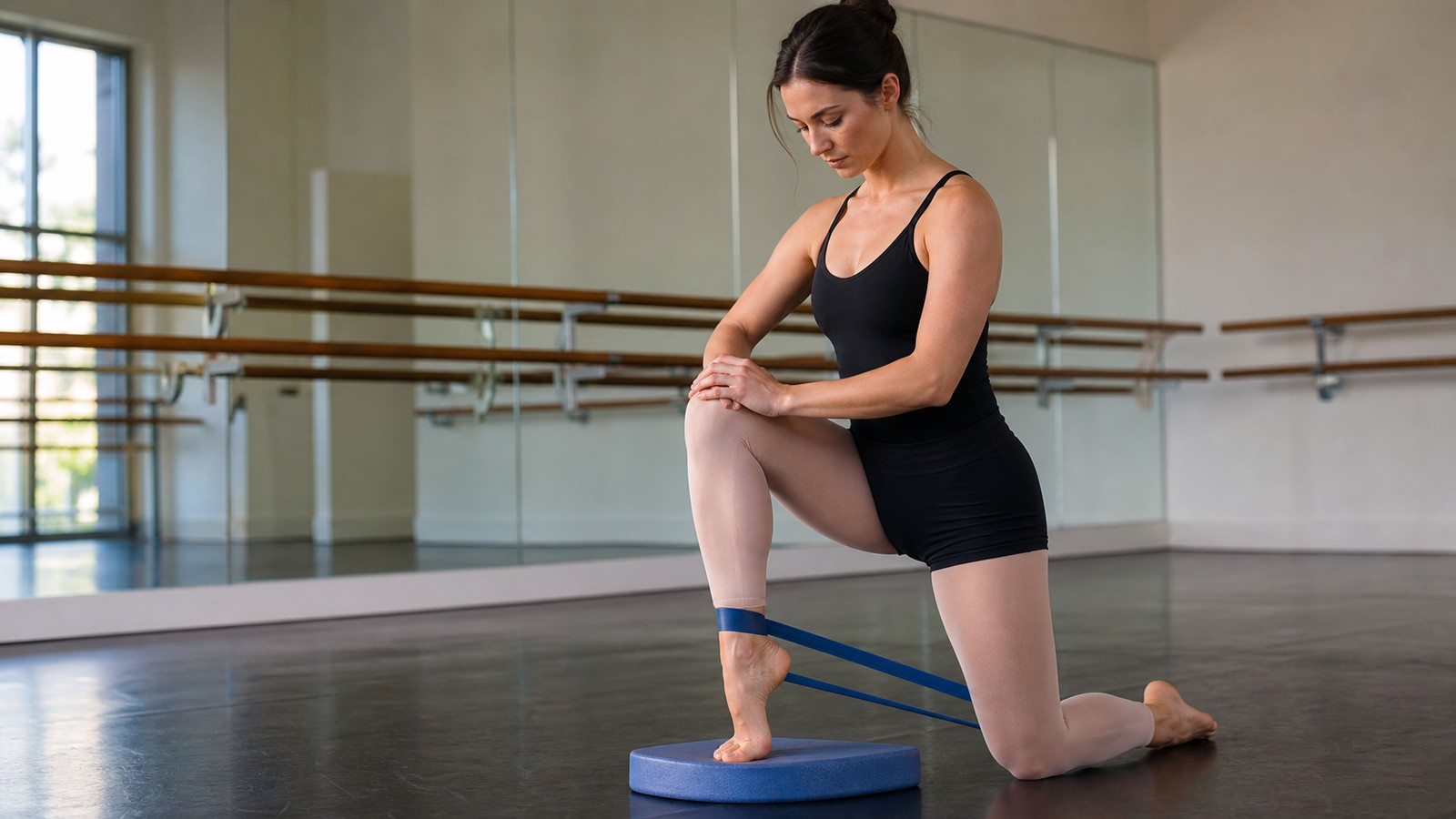
The Best Drills to Strengthen the Ankles for Safe Pointe and Jump Landings sounds simple at first, but the best answer depends on your goal, your current routine, and how well the idea fits the rest of your life. This guide takes a practical coaching lens for busy adults so the advice stays useful, realistic, and easy to act on. You will see how the main idea works, where people usually get confused, and how to turn the concept into a routine that fits ordinary days.
Why This Topic Matters Now
Long-term results usually come from small improvements stacked over time. A slightly better warmup, a more realistic schedule, a higher-protein breakfast, a regular walk, or a calmer bedtime routine may look modest. Together, those choices create the environment where bigger goals become possible.
Beginners should prioritize clarity over complexity. A simple routine performed well teaches more than an advanced routine performed inconsistently. Once the basics feel familiar, adding variety becomes useful because it solves specific problems instead of creating noise.
For most people, the first step is to define the outcome clearly. Fat loss, endurance, joint comfort, strength, mobility, confidence, and general health can all point toward slightly different choices. A good plan begins by naming the desired result, then choosing the simplest action that supports it. That keeps the process grounded instead of chasing every new trend.
What Most People Get Wrong
Recovery is part of the training effect. Sleep, hydration, protein, easier movement, and planned rest days make hard work productive. Without recovery, the body receives stress but has fewer resources to adapt. That is why smart plans alternate challenge with restoration.
The second step is matching intensity to recovery. A workout or habit that looks impressive on paper can become counterproductive if it leaves you too sore, hungry, tired, or discouraged to repeat it. Progress comes from the dose you can recover from, not the dose that sounds hardest.
Consistency is easier when the plan has a low-friction version. On a strong day, you can do the full session. On a busy day, a shorter version keeps the habit alive. That flexibility prevents the all-or-nothing cycle that makes many fitness plans collapse after a few weeks.
For The Best Drills to Strengthen the Ankles for Safe Pointe and Jump Landings, the practical test is whether the next step is specific enough to do today. That might mean choosing a shorter session, adjusting intensity, changing equipment, planning recovery, or measuring one useful signal for the next two weeks.
How to Apply It Without Overthinking
Technique matters because small errors become larger under fatigue. Body position, breathing, range of motion, pacing, and setup all influence whether the work trains the intended system. When form is clear, the same session can feel smoother and produce better results without adding extra time.
A common mistake is changing too many variables at once. If you add volume, intensity, new exercises, stricter food rules, and less rest in the same week, it becomes hard to know what helped and what caused problems. One meaningful adjustment at a time is usually more useful.
The practical question is not whether the idea is good in theory. It is whether it helps you make a better decision today. If the next step is clear, safe, and repeatable, the topic has become useful rather than just interesting.
The Smart Way to Progress
The best routines also account for enjoyment. Enjoyment does not mean every session is easy, but it does mean the plan has some element you can look forward to. People repeat behaviors that feel rewarding, purposeful, or clearly connected to the identity they are building.
Experienced exercisers can benefit from revisiting fundamentals. Plateaus often come from neglected basics: rushed warmups, inconsistent sleep, poor pacing, or unclear progression. Refining the obvious details can restart progress without needing a complete reinvention.
Measurement should support judgment rather than replace it. Calories, steps, heart rate, load, repetitions, sleep, soreness, and mood can all provide clues. The goal is not to track everything forever. The goal is to notice patterns early enough to make smart adjustments.
For The Best Drills to Strengthen the Ankles for Safe Pointe and Jump Landings, the practical test is whether the next step is specific enough to do today. That might mean choosing a shorter session, adjusting intensity, changing equipment, planning recovery, or measuring one useful signal for the next two weeks.
Mistakes That Slow Results
Long-term results usually come from small improvements stacked over time. A slightly better warmup, a more realistic schedule, a higher-protein breakfast, a regular walk, or a calmer bedtime routine may look modest. Together, those choices create the environment where bigger goals become possible.
Beginners should prioritize clarity over complexity. A simple routine performed well teaches more than an advanced routine performed inconsistently. Once the basics feel familiar, adding variety becomes useful because it solves specific problems instead of creating noise.
For most people, the first step is to define the outcome clearly. Fat loss, endurance, joint comfort, strength, mobility, confidence, and general health can all point toward slightly different choices. A good plan begins by naming the desired result, then choosing the simplest action that supports it. That keeps the process grounded instead of chasing every new trend.
How to Make It Fit Real Life
Recovery is part of the training effect. Sleep, hydration, protein, easier movement, and planned rest days make hard work productive. Without recovery, the body receives stress but has fewer resources to adapt. That is why smart plans alternate challenge with restoration.
The second step is matching intensity to recovery. A workout or habit that looks impressive on paper can become counterproductive if it leaves you too sore, hungry, tired, or discouraged to repeat it. Progress comes from the dose you can recover from, not the dose that sounds hardest.
Consistency is easier when the plan has a low-friction version. On a strong day, you can do the full session. On a busy day, a shorter version keeps the habit alive. That flexibility prevents the all-or-nothing cycle that makes many fitness plans collapse after a few weeks.
For The Best Drills to Strengthen the Ankles for Safe Pointe and Jump Landings, the practical test is whether the next step is specific enough to do today. That might mean choosing a shorter session, adjusting intensity, changing equipment, planning recovery, or measuring one useful signal for the next two weeks.
Final Takeaway
Technique matters because small errors become larger under fatigue. Body position, breathing, range of motion, pacing, and setup all influence whether the work trains the intended system. When form is clear, the same session can feel smoother and produce better results without adding extra time.
A common mistake is changing too many variables at once. If you add volume, intensity, new exercises, stricter food rules, and less rest in the same week, it becomes hard to know what helped and what caused problems. One meaningful adjustment at a time is usually more useful.
The practical question is not whether the idea is good in theory. It is whether it helps you make a better decision today. If the next step is clear, safe, and repeatable, the topic has become useful rather than just interesting.
The final takeaway is straightforward: use drills strengthen ankles safe pointe as a decision-making tool, not a rule that removes judgment. Start with the smallest useful action, repeat it long enough to learn from it, and adjust based on how your body responds. That approach keeps progress steady without turning fitness into a constant guessing game.
For most people, the first step is to define the outcome clearly. Fat loss, endurance, joint comfort, strength, mobility, confidence, and general health can all point toward slightly different choices. A good plan begins by naming the desired result, then choosing the simplest action that supports it. That keeps the process grounded instead of chasing every new trend.
The practical question is not whether the idea is good in theory. It is whether it helps you make a better decision today. If the next step is clear, safe, and repeatable, the topic has become useful rather than just interesting.
Measurement should support judgment rather than replace it. Calories, steps, heart rate, load, repetitions, sleep, soreness, and mood can all provide clues. The goal is not to track everything forever. The goal is to notice patterns early enough to make smart adjustments.
Consistency is easier when the plan has a low-friction version. On a strong day, you can do the full session. On a busy day, a shorter version keeps the habit alive. That flexibility prevents the all-or-nothing cycle that makes many fitness plans collapse after a few weeks.
Measurement should support judgment rather than replace it. Calories, steps, heart rate, load, repetitions, sleep, soreness, and mood can all provide clues. The goal is not to track everything forever. The goal is to notice patterns early enough to make smart adjustments.
For most people, the first step is to define the outcome clearly. Fat loss, endurance, joint comfort, strength, mobility, confidence, and general health can all point toward slightly different choices. A good plan begins by naming the desired result, then choosing the simplest action that supports it. That keeps the process grounded instead of chasing every new trend.
Recovery is part of the training effect. Sleep, hydration, protein, easier movement, and planned rest days make hard work productive. Without recovery, the body receives stress but has fewer resources to adapt. That is why smart plans alternate challenge with restoration.
Measurement should support judgment rather than replace it. Calories, steps, heart rate, load, repetitions, sleep, soreness, and mood can all provide clues. The goal is not to track everything forever. The goal is to notice patterns early enough to make smart adjustments.
The second step is matching intensity to recovery. A workout or habit that looks impressive on paper can become counterproductive if it leaves you too sore, hungry, tired, or discouraged to repeat it. Progress comes from the dose you can recover from, not the dose that sounds hardest.
A common mistake is changing too many variables at once. If you add volume, intensity, new exercises, stricter food rules, and less rest in the same week, it becomes hard to know what helped and what caused problems. One meaningful adjustment at a time is usually more useful.
Experienced exercisers can benefit from revisiting fundamentals. Plateaus often come from neglected basics: rushed warmups, inconsistent sleep, poor pacing, or unclear progression. Refining the obvious details can restart progress without needing a complete reinvention.
For most people, the first step is to define the outcome clearly. Fat loss, endurance, joint comfort, strength, mobility, confidence, and general health can all point toward slightly different choices. A good plan begins by naming the desired result, then choosing the simplest action that supports it. That keeps the process grounded instead of chasing every new trend.
Consistency is easier when the plan has a low-friction version. On a strong day, you can do the full session. On a busy day, a shorter version keeps the habit alive. That flexibility prevents the all-or-nothing cycle that makes many fitness plans collapse after a few weeks.