Unlocking Motivation: Why Gamification Works
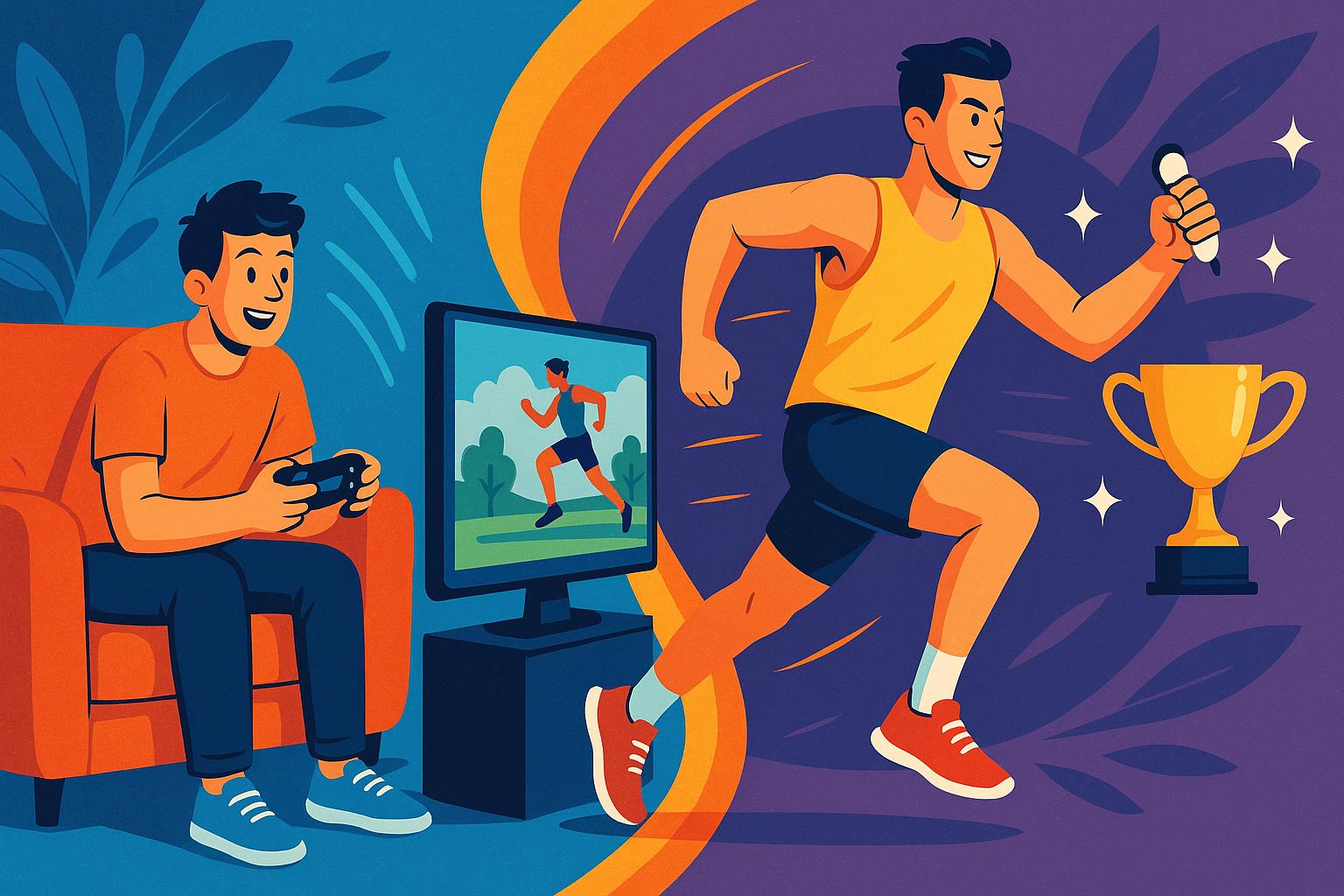
In a world where motivation can often be fleeting and the desire to stay active may wane, fitness gamification has emerged as a powerful tool to help individuals stay on track, push past barriers, and embrace a healthier lifestyle. The concept of gamifying fitness doesn’t just make exercise fun—it taps into core psychological principles that encourage consistent effort, achievement, and growth. By combining traditional fitness with game mechanics like points, rewards, levels, and challenges, fitness gamification has the power to transform the way we engage with our workouts.
But why does it work so well? What is it about turning exercise into a game that drives us to perform better, stick to our goals, and even enjoy the process? The answer lies in the psychology behind gamification—understanding why it taps into our intrinsic and extrinsic motivations, how it builds habits, and the way it creates a sense of accomplishment that propels us forward. In this article, we’ll explore the psychological factors that make fitness gamification such a powerful force in helping individuals achieve their fitness goals.
The Power of Intrinsic and Extrinsic Motivation
At the heart of fitness gamification is the interplay between intrinsic and extrinsic motivation. These two forms of motivation are central to how we engage with tasks, including exercise, and understanding them helps explain why gamification is so effective.
Intrinsic Motivation: This refers to motivation that comes from within. When you engage in an activity because you genuinely enjoy it or find it personally fulfilling, you are intrinsically motivated. In the context of fitness, intrinsic motivation might involve a love for running, the joy of feeling stronger, or the sense of accomplishment after completing a challenging workout.
Extrinsic Motivation: On the other hand, extrinsic motivation comes from external rewards or pressures. This includes things like money, praise, competition, or prizes. In the realm of fitness gamification, external rewards might include badges, virtual trophies, or the ability to unlock new levels in a fitness game.
Fitness gamification works because it blends both types of motivation. While intrinsic motivation fuels a passion for activity, extrinsic motivation—through rewards, recognition, and progress tracking—adds an external layer that keeps individuals engaged, accountable, and encouraged to continue. These two types of motivation often work hand-in-hand, reinforcing each other and making the fitness journey both fun and rewarding.
Dopamine: The Chemical That Fuels Fitness Gamification
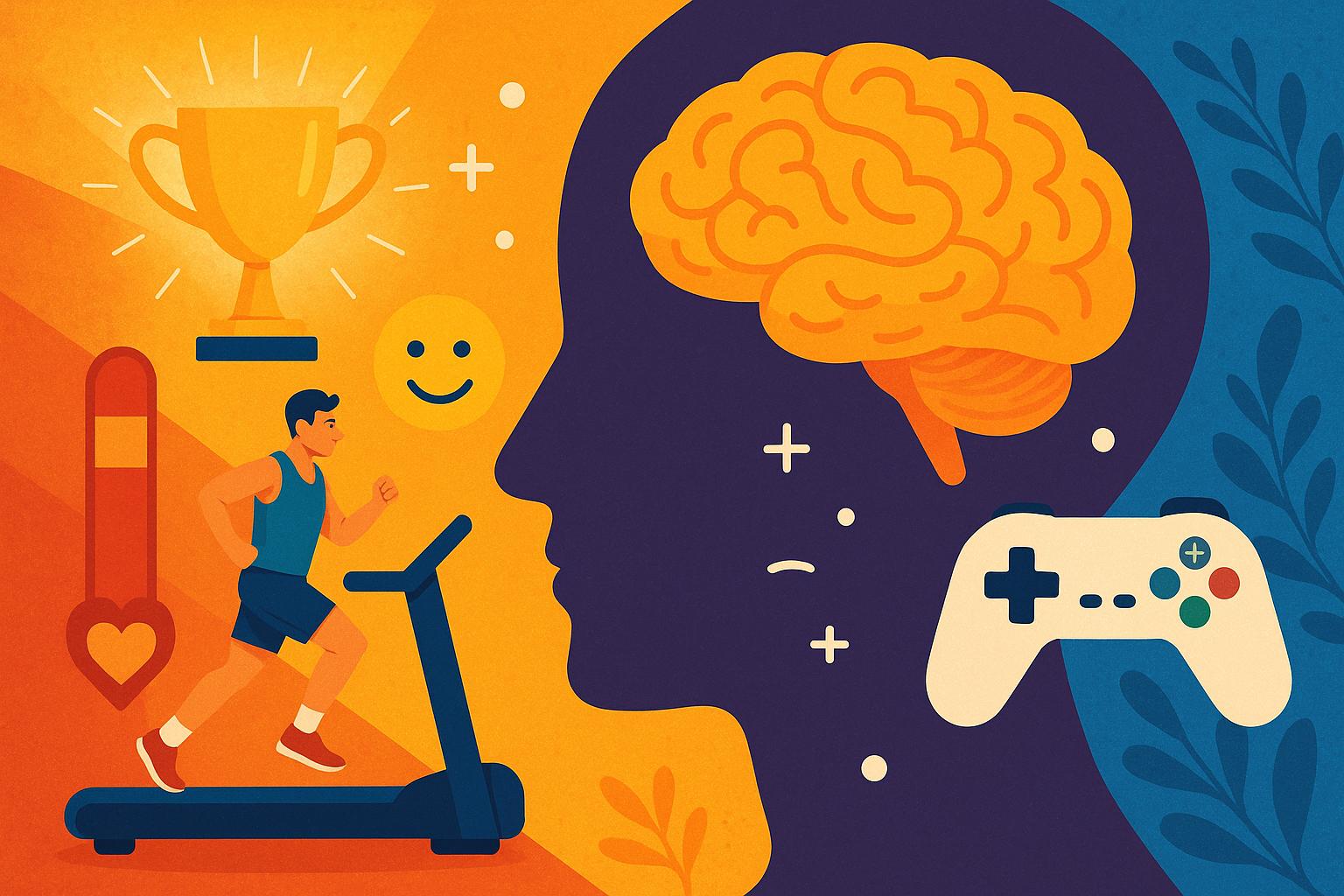
To understand why fitness gamification works, it’s essential to recognize the role that dopamine, the “feel-good” neurotransmitter, plays in the process. Dopamine is released in the brain as a response to rewards, progress, and achievements, making it one of the most powerful chemicals in motivating behavior.
When you complete a task in a fitness game—such as hitting a personal best, completing a workout, or achieving a goal—you experience a surge of dopamine. This release of dopamine is associated with feelings of pleasure, satisfaction, and reinforcement, which encourages you to repeat the activity.
Fitness gamification capitalizes on this by offering immediate feedback and rewards. Instead of waiting until the end of a long workout or a month of progress to see results, fitness games provide constant dopamine-triggering moments, such as completing a challenge, leveling up, or earning a badge. This creates a continuous cycle of motivation, where each achievement is reinforced by a dose of dopamine, making it easier to stick to the routine and continue striving for progress.
The Role of Goal Setting in Fitness Gamification
Goal-setting is another psychological principle that plays a significant role in the effectiveness of fitness gamification. Setting clear, measurable, and achievable goals is one of the most powerful ways to stay motivated, and fitness games leverage this principle to great effect.
In traditional fitness routines, goals are often vague or undefined—such as “get in shape” or “lose weight.” These types of goals can be difficult to measure and even harder to achieve, leading to frustration and burnout. Fitness gamification, however, takes goal-setting to the next level by making goals specific, measurable, and attainable. Fitness games often set daily, weekly, and monthly targets—like completing a certain number of steps, burning a set number of calories, or achieving specific fitness milestones.
This structured approach to goal-setting provides direction and clarity. It helps players see exactly where they stand and what they need to do to progress. As players complete each goal, they feel a sense of accomplishment, which in turn fuels further motivation to take on the next challenge. The more goals you achieve, the more confident and motivated you become to continue reaching higher levels, fostering a growth mindset.
Social Competition and Accountability
Another powerful aspect of fitness gamification is the social and competitive elements that many games incorporate. Humans are naturally social creatures, and the presence of a community can significantly impact our motivation and success. Fitness games often include social components, allowing players to connect with others, share their progress, and even compete in challenges.
This sense of community taps into the psychological principle of social comparison, where individuals measure their success against others. Competing with friends or strangers can be incredibly motivating, driving you to push harder and perform better. It’s not just about improving for yourself—it’s about outperforming others, reaching the top of the leaderboard, or completing a challenge with a group of people.
The social aspect of gamified fitness can also enhance accountability. When your friends or family are involved in your fitness journey, you’re more likely to stick to your goals because you know that others are watching and encouraging you. This social accountability helps maintain consistency, as you’re not only motivated by personal achievement but also by the support and competition of those around you.
The Habit-Building Power of Fitness Gamification
One of the most challenging aspects of maintaining a fitness routine is building consistency and creating lasting habits. Fitness gamification excels in this area by making exercise not only rewarding but also easy to incorporate into daily life. By turning exercise into a game, it becomes something to look forward to, rather than something to avoid.
Habit formation is driven by a combination of cues, routines, and rewards. Fitness games provide a structured framework for all three. The cue might be the notification you receive from the game, encouraging you to complete a challenge or reach a goal. The routine is the workout or activity that you perform to meet that goal, and the reward is the sense of achievement, the points you earn, or the virtual badges you collect for your efforts.
Over time, this consistent cycle of cue-routine-reward helps form a positive feedback loop that reinforces your fitness habit. The more you play, the more likely you are to stick with your exercise routine, as the game’s rewards and positive reinforcement create an environment of success and growth.
Building a Growth Mindset Through Fitness Gamification
Fitness gamification encourages the development of a growth mindset—the belief that abilities and intelligence can be developed through effort, practice, and perseverance. This is in contrast to a fixed mindset, where individuals believe that their abilities are static and unchangeable.
In the context of fitness, a growth mindset means seeing challenges as opportunities to improve rather than obstacles. Fitness games play a key role in fostering this mindset by framing setbacks or failures as part of the learning process. Missing a workout or not hitting a goal isn’t a sign of failure; it’s simply an opportunity to try again and improve. Each challenge in a fitness game is framed as a chance to learn, grow, and level up, reinforcing the belief that consistent effort leads to improvement.
As you achieve new milestones in a fitness game, you begin to internalize the idea that success is within your control. This mindset shift is crucial for long-term motivation and success. It’s not about being perfect; it’s about making progress and enjoying the journey.
The Impact of Immersive and Interactive Experiences
Fitness gamification doesn’t just rely on traditional exercise methods—it often incorporates immersive, interactive experiences that transport players to new worlds. These experiences, such as virtual reality (VR) workouts, interactive cycling or running apps, or story-driven fitness games, create an environment where exercise is part of an engaging narrative.
The sense of immersion is a powerful psychological tool that distracts players from the discomfort or monotony of exercise. By making exercise feel like an adventure, players are more likely to stay engaged, push through challenging workouts, and feel a sense of achievement as they progress through the game’s story. This immersion also adds an element of flow, the psychological state where players are fully absorbed in the activity and lose track of time, making exercise feel effortless and enjoyable.
Why Gamification Works for Fitness
At the core of fitness gamification lies a deep understanding of human psychology. From motivation and goal-setting to social comparison and the development of habits, fitness games utilize proven psychological principles to make exercise more enjoyable, engaging, and effective. By tapping into the brain’s reward system, fostering a growth mindset, and creating immersive, goal-driven experiences, fitness gamification has the power to help individuals transform their fitness journey into a fun, rewarding, and sustainable lifestyle.
Leveling Up Your Fitness Journey
The true beauty of fitness gamification is its ability to turn an otherwise mundane task into a dynamic and enjoyable experience. By combining the principles of psychology with the excitement of gaming, these tools help individuals stay motivated, track progress, and reach new levels of achievement. Whether you’re a beginner just starting your fitness journey or an experienced athlete looking for a new challenge, gamified fitness offers something for everyone. So why not embrace the power of gamification? Level up your fitness routine and make every workout an adventure!