
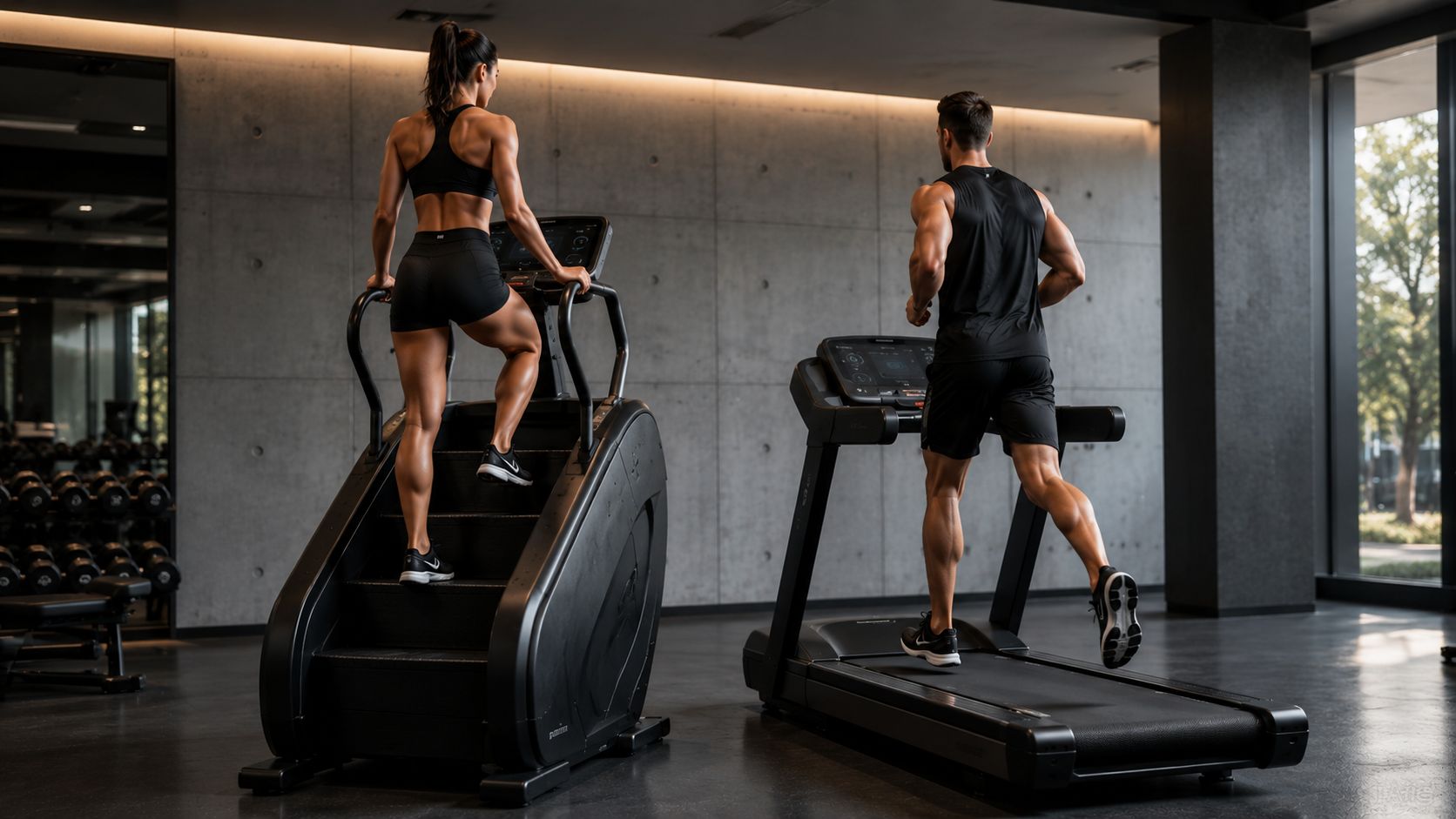
Choosing between a stair climber and a treadmill can feel surprisingly difficult, especially when both machines dominate modern gyms and promise powerful fitness results. At first glance, they appear to serve the same purpose: burning calories, improving cardiovascular endurance, and helping people get into better shape. Yet once you step onto each machine, the experience becomes completely different. One challenges you with relentless upward movement and muscular fatigue, while the other offers speed, versatility, and a more natural walking or running motion. The debate surrounding stair climbers versus treadmills has intensified as more people seek efficient workouts that fit busy schedules and specific health goals. Some individuals prioritize fat loss and calorie burn. Others want endurance, joint-friendly exercise, athletic performance, or lower-body muscle development. The truth is that both machines are highly effective, but they create different physiological demands and training adaptations.
The Stair Climber Experience: Climbing Into Intensity
The stair climber creates a unique workout experience because it simulates one of the most physically demanding forms of daily movement: climbing stairs continuously without rest. Unlike walking on flat ground, stair climbing forces the body to lift its own weight upward repeatedly, dramatically increasing muscular and cardiovascular demand.
One of the most noticeable effects of the stair climber is how quickly it elevates heart rate. Even moderate speeds can create significant cardiovascular stress because the lower body muscles must work constantly against gravity. The glutes, quadriceps, calves, and hamstrings remain highly engaged throughout the workout, making the stair climber especially popular among individuals seeking lower-body conditioning and muscular endurance.
The machine’s vertical movement pattern contributes heavily to its intensity. Every step requires force production, stabilization, and balance. Unlike some forms of cardio where momentum assists movement, the stair climber creates nearly continuous muscular tension. This often leads to a greater perception of effort compared to walking or jogging on a treadmill.
Because of its demanding nature, the stair climber can become highly efficient for shorter workouts. Many users find that 20 to 30 minutes on a stair climber produces intense fatigue and substantial calorie burn. This efficiency appeals to people with limited workout time who still want challenging sessions.
The stair climber also creates a lower-impact environment compared to running. While the movement remains demanding, it avoids the repeated pounding forces associated with high-speed treadmill running. This can make it attractive for individuals who want intense cardiovascular exercise while reducing impact stress on the joints.
However, stair climbers are not universally comfortable. Beginners may struggle with coordination, balance, or early muscular fatigue. The repetitive stepping motion can also become mentally exhausting for some users because the movement pattern rarely changes. For individuals with knee discomfort or limited mobility, the steep climbing angle may create additional strain.
Why Treadmills Remain the King of Versatility
Treadmills have remained one of the most popular cardio machines for decades because they accommodate an enormous variety of training styles. Walking, jogging, sprinting, incline hiking, interval training, endurance running, and recovery sessions can all take place on the same machine. This versatility gives treadmills a major advantage for users seeking flexibility.
The treadmill closely mimics natural human locomotion, which makes it highly intuitive. Most people can begin using a treadmill immediately without learning complex movement patterns. Beginners often feel more comfortable walking or lightly jogging compared to climbing continuously on a stair machine.
Speed and incline adjustments dramatically expand treadmill functionality. Incline walking can create substantial cardiovascular intensity while minimizing the impact associated with faster running speeds. Sprint intervals can improve athletic conditioning, power output, and cardiovascular performance. Long steady-state sessions support endurance development and fat-burning goals.
One major advantage of treadmill training is its scalability. A beginner recovering from inactivity can walk slowly at a mild incline, while elite athletes can perform aggressive sprint intervals at high speeds. This wide performance spectrum allows treadmills to remain useful throughout nearly every stage of a fitness journey.
Treadmills also provide superior movement freedom compared to stair climbers. Users can alter stride length, pace, incline, and rhythm throughout a workout. This variation often helps reduce mental fatigue and increases workout enjoyment.
Running mechanics on treadmills also translate more directly to outdoor activities and sports performance. Athletes training for races, hiking, field sports, or endurance events frequently rely on treadmills to simulate real-world movement patterns in controlled environments.
Still, treadmills are not without drawbacks. Running creates repetitive impact forces that can stress the knees, ankles, hips, and lower back, especially for individuals with poor biomechanics or existing joint issues. High-speed treadmill workouts may also increase injury risk if technique deteriorates under fatigue.
Calorie Burn and Fat Loss: Which Machine Wins?
One of the biggest reasons people choose cardio machines is fat loss. Both stair climbers and treadmills can support impressive calorie expenditure, but they achieve it differently.
The stair climber often feels more intense because it requires continuous upward movement against gravity. This demand heavily recruits the lower body muscles, particularly the glutes and quadriceps, which can elevate heart rate quickly and sustain high metabolic output. Many users report feeling exhausted after relatively short stair climber sessions because of the machine’s relentless muscular demand.
Treadmills, however, can produce extremely high calorie burn depending on speed and incline. Sprint intervals, incline walking, and endurance running all create substantial energy expenditure. High-speed treadmill sessions may exceed stair climber calorie burn in some cases because of the total-body energy demands associated with running.
The true determining factor is intensity and consistency rather than the machine itself. A challenging treadmill workout can easily outperform a low-effort stair climber session, and vice versa. The body responds primarily to workload, duration, and training quality.
Fat loss also depends heavily on sustainability. Some individuals can tolerate longer treadmill sessions comfortably, allowing greater total calorie expenditure over time. Others may prefer shorter but more intense stair climber workouts that fit busy schedules more effectively.
Muscle retention matters as well. The stair climber’s greater lower-body muscular engagement may help preserve or enhance leg development during fat-loss phases. Treadmills provide less resistance-based muscular stress unless incline work is emphasized heavily.
Ultimately, neither machine guarantees superior fat loss independently. Nutrition, recovery, training frequency, and overall energy balance remain the most important drivers of body composition change.
Lower-Body Muscle Activation and Athletic Development
When it comes to muscular recruitment, the stair climber has a clear reputation for targeting the lower body aggressively. The continuous stepping motion forces repeated contractions in the glutes, quadriceps, hamstrings, and calves. Many users feel intense muscle fatigue in these areas after relatively short sessions.
The glute activation created by stair climbers is one reason they are especially popular among individuals seeking stronger or more developed lower-body musculature. The climbing motion resembles loaded uphill movement patterns that naturally emphasize hip extension and posterior chain engagement.
Treadmills activate the lower body differently. Flat walking primarily targets endurance and movement efficiency, while incline walking significantly increases glute and hamstring involvement. Running introduces explosive muscular contractions and greater overall power demands, particularly at faster speeds.
Athletes often favor treadmills because they improve running mechanics, stride efficiency, and sport-specific conditioning. Sprint intervals on treadmills can develop speed, anaerobic power, and cardiovascular resilience in ways stair climbers cannot fully replicate.
The stair climber, however, excels at muscular endurance. Sustained climbing challenges the legs continuously without significant recovery between steps. This can improve fatigue resistance and strengthen stabilizing musculature throughout the lower body.
The best machine for athletic development depends heavily on the goal. For explosive movement and running performance, treadmills often provide superior transferability. For lower-body endurance and glute-focused conditioning, stair climbers may hold the advantage.
Joint Impact, Recovery, and Long-Term Sustainability
Joint health plays a major role in cardio machine selection, especially for individuals training consistently over long periods. Recovery demands, impact forces, and orthopedic stress all influence workout sustainability.
Stair climbers generally create lower impact than running because there is less repeated pounding against a surface. This can reduce stress on the ankles, knees, and hips for some individuals. However, the steep stepping motion places constant load on the knees and lower body muscles, which may aggravate certain conditions if form deteriorates.
Treadmills vary significantly depending on workout style. Walking produces relatively low impact, especially on cushioned modern treadmill surfaces. Running, however, introduces repetitive ground reaction forces that increase substantially with speed and duration.
Incline treadmill walking has become especially popular because it combines high cardiovascular demand with lower impact compared to running. This approach allows many individuals to achieve intense workouts while minimizing joint stress.
Recovery demands also differ between the two machines. Stair climber workouts often create intense muscular fatigue in the lower body, particularly in beginners. Treadmill running may create greater systemic fatigue and impact-related soreness.
Sustainability ultimately depends on individual biomechanics and comfort. Some people can run for years without issue, while others experience recurring discomfort and thrive on lower-impact alternatives. Listening to the body and adjusting training volume appropriately remains essential regardless of machine choice.
Motivation, Enjoyment, and Workout Psychology
One of the most overlooked aspects of cardio training is enjoyment. The most scientifically optimized workout means little if someone dreads performing it consistently. Motivation and adherence often determine long-term results more than theoretical calorie calculations.
Treadmills tend to feel more dynamic because users can change pace, incline, and movement style frequently. Walking, jogging, sprinting, and interval training create variety that helps prevent boredom. Watching shows, listening to music, or participating in virtual running experiences also integrates naturally with treadmill workouts.
Stair climbers create a different psychological experience. The constant upward motion often feels intense and mentally demanding. Many users describe stair climber workouts as challenging but highly rewarding because of the strong sense of accomplishment they create.
Some individuals love the focused intensity of climbing workouts, while others find the repetitive stepping mentally exhausting. Personal preference matters enormously in determining which machine someone will use consistently.
Goal alignment also affects motivation. A person training for hiking adventures or lower-body endurance may feel energized by stair climber sessions. Someone preparing for a race or outdoor running event may naturally prefer treadmill training.
Modern fitness technology has enhanced engagement on both machines. Interactive displays, heart rate tracking, performance analytics, and virtual environments make cardio sessions feel more immersive and purposeful.
The best cardio machine is often the one that fits naturally into a person’s lifestyle and creates a positive long-term relationship with movement.
Finding the Right Machine for Your Fitness Goals
The stair climber versus treadmill debate does not have a universal winner because fitness goals vary dramatically from person to person. Each machine offers unique strengths that align with different training priorities. For individuals seeking lower-body endurance, glute activation, and highly efficient cardiovascular workouts, the stair climber can be extraordinarily effective. Its intense vertical movement challenges both the cardiovascular system and muscular endurance simultaneously, making it ideal for short but demanding sessions. For versatility, athletic conditioning, walking programs, running performance, and adaptable intensity levels, treadmills remain difficult to beat. They support everything from beginner recovery walks to elite sprint training and endurance development. Body type, injury history, recovery ability, and personal enjoyment all influence which machine is ultimately better. Some people thrive on the grind of stair climbing, while others feel empowered by the rhythm and flexibility of treadmill workouts. In many cases, the smartest solution is not choosing one machine exclusively. Combining treadmill and stair climber workouts can create balanced conditioning that develops endurance, muscular strength, calorie expenditure, and cardiovascular fitness simultaneously. Fitness success rarely comes from finding a perfect machine. It comes from building consistent habits, training intelligently, and choosing workouts that remain sustainable over time. Whether climbing endlessly upward or running toward new performance goals, both machines can become powerful tools for transforming health, energy, and confidence when used with purpose and consistency.


